


How do high-performance desert vehicles achieve "flying close to the ground" in soft sand?
Release Time : 2025-10-22
In the vast desert, with its rolling dunes and soft, powdery surface, ordinary vehicles often struggle to move, becoming stuck in the sand. However, high-performance desert vehicles (HPVs) can traverse this extreme terrain like the wind, seemingly "flying close to the ground," carving out breathtaking tracks. This astonishing off-road capability isn't simply due to powerful power; it's a comprehensive engineering feat that integrates the powertrain, suspension technology, tire design, body structure, and driving strategy. It's these precisely coordinated systems that enable these vehicles to achieve ultimate control on soft sand: "floating without sinking, fast yet stable."
1. Large Contact Area: Allowing the Vehicle to "Float" on the Sand
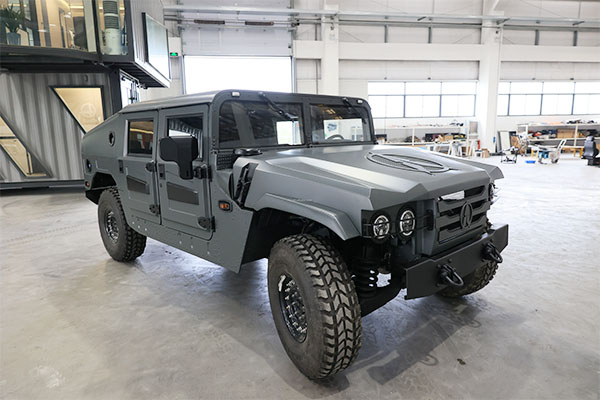
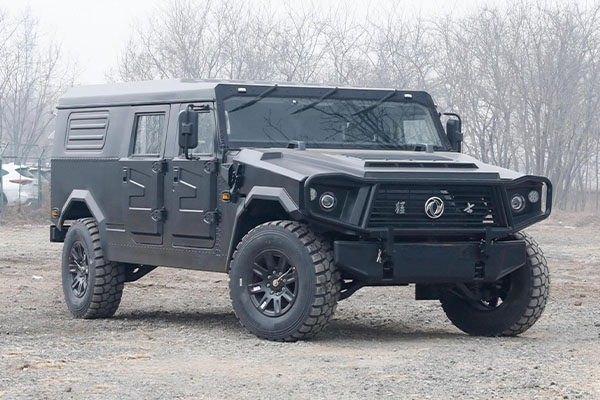
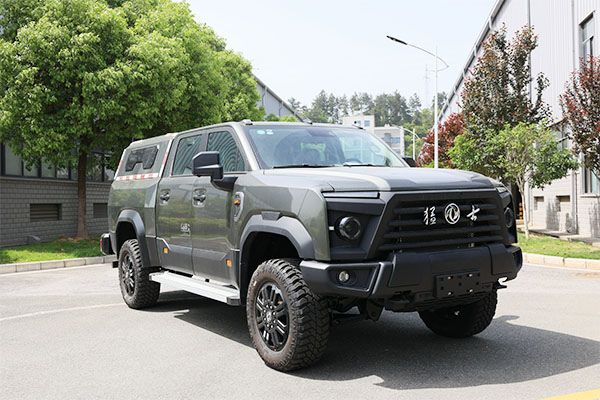
Sand has extremely low bearing capacity, making it very easy for vehicles to sink. High-performance desert vehicles utilize ultra-wide, large-diameter desert tires to significantly increase the contact area between the tire and the sand, thereby reducing the pressure per unit area and achieving a "floating" effect. These specialized tires typically run at low pressure, creating a wider contact patch during driving. They act like "snowshoes" to distribute the vehicle's weight and prevent it from sinking into the soft sand. Some top-of-the-line models also feature tracks or semi-tracks to further enhance flotation, ensuring stable traversal even on the crests of highly fluid dunes.
2. Long-travel independent suspension: Absorbing shock and maintaining grip
The desert terrain is undulating, and high-speed sprinting and dune-crossing are common. High-performance desert vehicles generally utilize long-travel independent suspension systems, with single-wheel travel exceeding 300mm, or even 500mm. This suspension quickly absorbs impact energy during severe wheel oscillation, maintaining tire contact with the ground and ensuring continuous power output. Furthermore, high-performance nitrogen shock absorbers feature adjustable damping, adjusting in real time based on sand hardness and vehicle speed. This ensures both comfort and enhanced handling stability, allowing the vehicle to maintain a close-fitting grip even over rolling dunes.
3. Powerful Power and Intelligent Transmission: Precise Output to Prevent Slipping
Sand has low adhesion, and even slightly higher power can easily cause slippage and idling, leading to difficulties. High-performance desert vehicles are typically equipped with large-displacement naturally aspirated or turbocharged engines, providing ample low-speed torque, ensuring strong thrust even when climbing hills at low speeds. Furthermore, lightweight bodies and efficient transmissions achieve a high power-to-weight ratio. Advanced four-wheel drive systems and electronic limited-slip differentials intelligently distribute power between the front and rear axles and left and right wheels, preventing single-wheel spin and ensuring that every horsepower is effectively converted into forward motion. Select models also feature a sand driving mode that automatically optimizes throttle response, transmission shifting, and traction control, allowing the driver to focus on control.
4. Aerodynamics and Body Layout: Optimizing High-Speed Stability
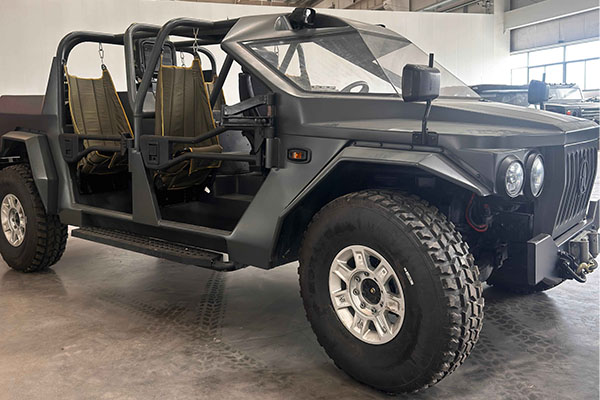
When a desert vehicle traverses sand dunes at speeds exceeding 100 km/h, aerodynamic design becomes crucial. A streamlined body, low center of gravity, and wide track design effectively reduce wind resistance and the risk of rollover. The vehicle's underbody typically features a flattened fender to reduce air turbulence and increase downforce at high speeds. Furthermore, the cockpit is positioned centrally or slightly rearward, resulting in a more balanced center of gravity and improved controllability during cornering and landing from jumps. These features allow the vehicle to quickly regain grip after landing, achieving "fly high and land firmly."
5. Professional Driving Skills and Navigation Systems: Extreme Controls That Integrate Driver and Vehicle
"Flying close to the ground" is not only a reflection of vehicle performance but also relies heavily on the driver's experience and judgment. Professional desert drivers master techniques such as "slope climbing, cornering, and speed control," using the curves of sand dunes to glide and minimize power loss. Modern high-performance desert vehicles are also equipped with GPS navigation, terrain feedback systems, and real-time tire pressure monitoring to help drivers accurately plan routes, avoid quicksand areas or blind spots on steep slopes, and ensure safety at high speeds.
The ability of high-performance desert vehicles to "fly close to the ground" in soft sand is the result of a multi-faceted integration of buoyancy design, suspension system, power output, body structure, and intelligent control. It is not only a pinnacle of mechanical engineering, but also a symbol of mankind's challenge to the limits and conquest of nature.
1. Large Contact Area: Allowing the Vehicle to "Float" on the Sand
Sand has extremely low bearing capacity, making it very easy for vehicles to sink. High-performance desert vehicles utilize ultra-wide, large-diameter desert tires to significantly increase the contact area between the tire and the sand, thereby reducing the pressure per unit area and achieving a "floating" effect. These specialized tires typically run at low pressure, creating a wider contact patch during driving. They act like "snowshoes" to distribute the vehicle's weight and prevent it from sinking into the soft sand. Some top-of-the-line models also feature tracks or semi-tracks to further enhance flotation, ensuring stable traversal even on the crests of highly fluid dunes.
2. Long-travel independent suspension: Absorbing shock and maintaining grip
The desert terrain is undulating, and high-speed sprinting and dune-crossing are common. High-performance desert vehicles generally utilize long-travel independent suspension systems, with single-wheel travel exceeding 300mm, or even 500mm. This suspension quickly absorbs impact energy during severe wheel oscillation, maintaining tire contact with the ground and ensuring continuous power output. Furthermore, high-performance nitrogen shock absorbers feature adjustable damping, adjusting in real time based on sand hardness and vehicle speed. This ensures both comfort and enhanced handling stability, allowing the vehicle to maintain a close-fitting grip even over rolling dunes.
3. Powerful Power and Intelligent Transmission: Precise Output to Prevent Slipping
Sand has low adhesion, and even slightly higher power can easily cause slippage and idling, leading to difficulties. High-performance desert vehicles are typically equipped with large-displacement naturally aspirated or turbocharged engines, providing ample low-speed torque, ensuring strong thrust even when climbing hills at low speeds. Furthermore, lightweight bodies and efficient transmissions achieve a high power-to-weight ratio. Advanced four-wheel drive systems and electronic limited-slip differentials intelligently distribute power between the front and rear axles and left and right wheels, preventing single-wheel spin and ensuring that every horsepower is effectively converted into forward motion. Select models also feature a sand driving mode that automatically optimizes throttle response, transmission shifting, and traction control, allowing the driver to focus on control.
4. Aerodynamics and Body Layout: Optimizing High-Speed Stability
When a desert vehicle traverses sand dunes at speeds exceeding 100 km/h, aerodynamic design becomes crucial. A streamlined body, low center of gravity, and wide track design effectively reduce wind resistance and the risk of rollover. The vehicle's underbody typically features a flattened fender to reduce air turbulence and increase downforce at high speeds. Furthermore, the cockpit is positioned centrally or slightly rearward, resulting in a more balanced center of gravity and improved controllability during cornering and landing from jumps. These features allow the vehicle to quickly regain grip after landing, achieving "fly high and land firmly."
5. Professional Driving Skills and Navigation Systems: Extreme Controls That Integrate Driver and Vehicle
"Flying close to the ground" is not only a reflection of vehicle performance but also relies heavily on the driver's experience and judgment. Professional desert drivers master techniques such as "slope climbing, cornering, and speed control," using the curves of sand dunes to glide and minimize power loss. Modern high-performance desert vehicles are also equipped with GPS navigation, terrain feedback systems, and real-time tire pressure monitoring to help drivers accurately plan routes, avoid quicksand areas or blind spots on steep slopes, and ensure safety at high speeds.
The ability of high-performance desert vehicles to "fly close to the ground" in soft sand is the result of a multi-faceted integration of buoyancy design, suspension system, power output, body structure, and intelligent control. It is not only a pinnacle of mechanical engineering, but also a symbol of mankind's challenge to the limits and conquest of nature.