


How do high-performance desert vehicles become survival experts in ever-changing sand conditions?
Release Time : 2025-11-05
In the vast, boundless desert, the yellow sand stretches like a sea, and the terrain changes rapidly—soft shifting sands, steep dunes, dried-up riverbeds, and scorching heatwaves intertwine to create an extreme and dangerous "no-man's land." However, it is precisely in this place that the limits of both machinery and human endurance are tested, that high-performance desert vehicles, with their superior engineering design and intelligent adaptability, transform into "all-around geniuses" of the sand, becoming reliable partners for explorers, scientific expeditions, special forces, and even desert tourists. They can not only speed across soft sand, but also calmly cope with multiple challenges such as high temperatures, water shortages, and navigation failures, making them true survival experts in ever-changing sand conditions.
1. Wide, Low-Pressure Tires: "Snowshoes" on Shifting Sands
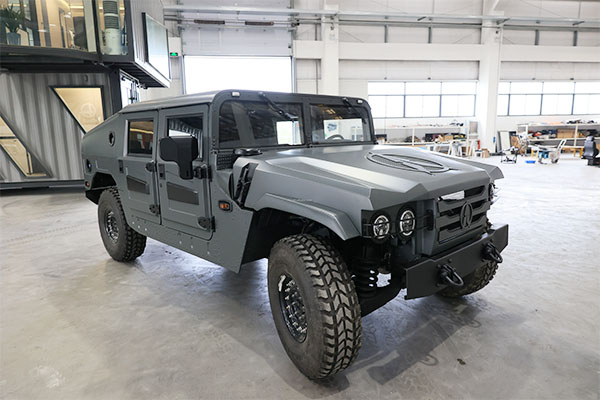
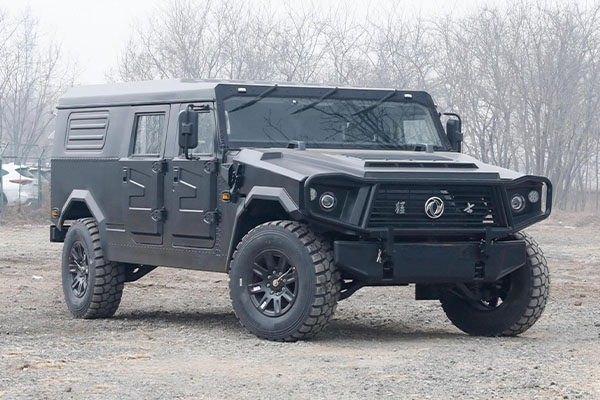
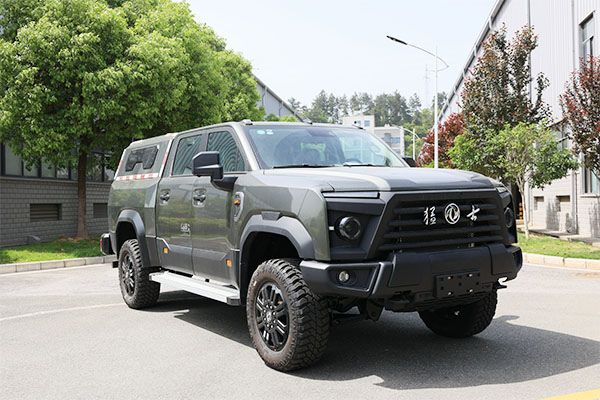
The most prominent feature of desert vehicles is their extra-wide, extra-large low-pressure tires. Tire pressure can be reduced to below 0.5 bar, increasing the contact area by 2-3 times, like equipping the vehicle with "desert snowshoes," effectively reducing the pressure on the sand and preventing it from getting stuck in quicksand. With its high aspect ratio sidewalls and reinforced sidewalls, the tire possesses exceptional deformation cushioning capabilities in bumpy sand dunes, absorbing impacts while minimizing the risk of blowouts. Some models also feature a tubeless design, allowing for slow deflation even when punctured by sharp quartz, ensuring safe extrication.
2. Powerful Engine and Intelligent Four-Wheel Drive: The "Heart" for Conquering Sand Dunes
Facing steep sand slopes exceeding 45 degrees, ordinary vehicles often fail due to insufficient torque or wheel slippage. High-performance desert vehicles are equipped with large-displacement turbocharged engines or high-torque electric motors, coupled with low-speed torque amplification, ensuring robust power delivery even at low RPMs. The full-time four-wheel drive system, combined with an electronic differential lock, monitors wheel slippage in real time, automatically distributing power to the wheel with the strongest traction, achieving a "one axle stuck, three axles rescue" extrication capability. Some high-end models also feature a "sand mode," automatically adjusting throttle response, transmission logic, and traction control, allowing drivers to easily navigate complex sand conditions.
3. Lightweight Body and High Ground Clearance: The "Skeleton" for Agile Traversal
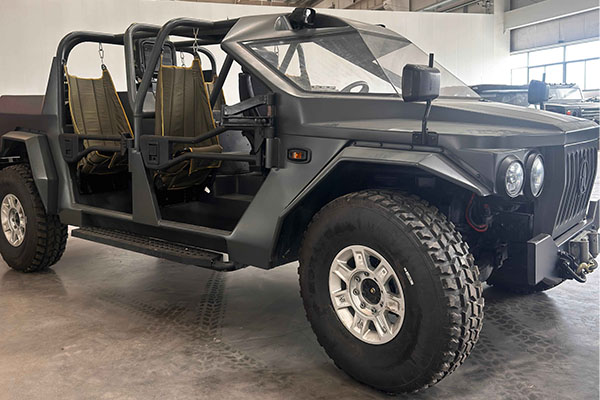
To reduce weight and improve maneuverability, desert vehicles generally employ high-strength steel-aluminum hybrid or full-tube array non-load-bearing bodies, ensuring torsional rigidity while significantly reducing curb weight. A ground clearance of over 400 mm allows for easy traversal of sand ridges, dry ditches, and rocky areas. Short front and rear overhangs further optimize approach and departure angles, preventing bottoming out during climbs or descents. The vehicle's center of gravity is precisely tuned to maintain stability during high-speed cornering or side slope driving, reducing the risk of rollover.
4. Environmental Adaptability and Survival Guarantee: A "Life Cabin" in Extreme Conditions
The temperature difference between day and night in the desert can reach 50°C, with daytime temperatures often exceeding 50°C. Vehicles are equipped with efficient air conditioning systems and insulated windows to ensure passenger comfort; the fuel system, electrical system, and intake system have all undergone dustproof and high-temperature resistant reinforcement treatment. Large-capacity fuel and water tanks support long-distance trekking. Some models integrate satellite communication, Beidou/GPS dual-mode navigation, and a winch for getting out of trouble, enabling accurate positioning and emergency assistance even in areas without signal. The interior design emphasizes practicality, with details such as sand-proof sealed doors, quick-release seats, and an integrated tool compartment, reflecting the engineering philosophy of "born for survival."
This high-performance desert vehicle is more than just a means of transportation; it's an extension of humanity's exploration of extreme environments. It integrates power, off-road capability, reliability, and survival assurance, carving reliable paths through the shifting sands. Whether scientific expeditions delve into the Taklamakan Desert or off-road enthusiasts traverse the Sahara, this desert "all-around sprite" fearlessly embodies the possibility of harmonious coexistence between machinery and nature—writing the most hardcore mobile legend in the most desolate places.
1. Wide, Low-Pressure Tires: "Snowshoes" on Shifting Sands
The most prominent feature of desert vehicles is their extra-wide, extra-large low-pressure tires. Tire pressure can be reduced to below 0.5 bar, increasing the contact area by 2-3 times, like equipping the vehicle with "desert snowshoes," effectively reducing the pressure on the sand and preventing it from getting stuck in quicksand. With its high aspect ratio sidewalls and reinforced sidewalls, the tire possesses exceptional deformation cushioning capabilities in bumpy sand dunes, absorbing impacts while minimizing the risk of blowouts. Some models also feature a tubeless design, allowing for slow deflation even when punctured by sharp quartz, ensuring safe extrication.
2. Powerful Engine and Intelligent Four-Wheel Drive: The "Heart" for Conquering Sand Dunes
Facing steep sand slopes exceeding 45 degrees, ordinary vehicles often fail due to insufficient torque or wheel slippage. High-performance desert vehicles are equipped with large-displacement turbocharged engines or high-torque electric motors, coupled with low-speed torque amplification, ensuring robust power delivery even at low RPMs. The full-time four-wheel drive system, combined with an electronic differential lock, monitors wheel slippage in real time, automatically distributing power to the wheel with the strongest traction, achieving a "one axle stuck, three axles rescue" extrication capability. Some high-end models also feature a "sand mode," automatically adjusting throttle response, transmission logic, and traction control, allowing drivers to easily navigate complex sand conditions.
3. Lightweight Body and High Ground Clearance: The "Skeleton" for Agile Traversal
To reduce weight and improve maneuverability, desert vehicles generally employ high-strength steel-aluminum hybrid or full-tube array non-load-bearing bodies, ensuring torsional rigidity while significantly reducing curb weight. A ground clearance of over 400 mm allows for easy traversal of sand ridges, dry ditches, and rocky areas. Short front and rear overhangs further optimize approach and departure angles, preventing bottoming out during climbs or descents. The vehicle's center of gravity is precisely tuned to maintain stability during high-speed cornering or side slope driving, reducing the risk of rollover.
4. Environmental Adaptability and Survival Guarantee: A "Life Cabin" in Extreme Conditions
The temperature difference between day and night in the desert can reach 50°C, with daytime temperatures often exceeding 50°C. Vehicles are equipped with efficient air conditioning systems and insulated windows to ensure passenger comfort; the fuel system, electrical system, and intake system have all undergone dustproof and high-temperature resistant reinforcement treatment. Large-capacity fuel and water tanks support long-distance trekking. Some models integrate satellite communication, Beidou/GPS dual-mode navigation, and a winch for getting out of trouble, enabling accurate positioning and emergency assistance even in areas without signal. The interior design emphasizes practicality, with details such as sand-proof sealed doors, quick-release seats, and an integrated tool compartment, reflecting the engineering philosophy of "born for survival."
This high-performance desert vehicle is more than just a means of transportation; it's an extension of humanity's exploration of extreme environments. It integrates power, off-road capability, reliability, and survival assurance, carving reliable paths through the shifting sands. Whether scientific expeditions delve into the Taklamakan Desert or off-road enthusiasts traverse the Sahara, this desert "all-around sprite" fearlessly embodies the possibility of harmonious coexistence between machinery and nature—writing the most hardcore mobile legend in the most desolate places.